

OUR FINISHES
Sandblasting
Sandblasting uses abrasives to prepare metal surfaces for subsequent processing or treatments.
Our Strengths
Sandblasting Applications
Optimal Paint Adhesion We create the ideal surface roughness (Ra) to ensure maximum adhesion and durability for subsequent protective treatments.
Process Uniformity The abrasive stream is calibrated to treat complex geometries without altering the critical dimensional tolerances of the part.
Deep Cleaning Total removal of oxides, scale, and contaminants to return the metal to its pure state, ready for processing.

sandblasting, process and characteristics
_ sandblasting
process & features

The sandblasting process, using microspheres, is a surface treatment where particles of various shapes, sizes, and materials—typically metal or glass beads—are projected onto a metal surface to provide a diffused or mixed reflection.The spherical shape of the grains, their small size, and the projection speed allow for the production of parts with virtually identical surfaces. These micro-particles are chemically inert, preventing scale or contamination on the metal surface.Being non-abrasive, this process increases the material's corrosion resistance and improves its ability to withstand stress (Shot Peening effect).Sandblasting is a mechanical procedure that erodes the outermost part of the metal through abrasion caused by a jet of sand or metal beads and air.This is achieved using a sandblasting machine, which mixes the abrasive media into the airflow from a compressor and regulates its flow through a dosing valve.The operator directs the jet onto the target areas using a nozzle. This type of process, specifically through shot peening, produces a semi-matte finish..It can serve as the final finishing stage or as a pre-treatment for painting, removing impurities from the material and creating a surface that promotes optimal paint adhesion.
This treatment not only provides the metal with an aesthetic and uniform finish but also ensures an ideally prepared surface for applications across various industrial sectors, including automotive, aerospace, and construction.Precision and attention to detail during the sandblasting process are essential to guarantee the quality and performance of the final product. Furthermore, it is important to emphasize that our operators are highly skilled and undergo continuous training, ensuring high levels of expertise and professionalism throughout the entire process.
l Industries Served
Automotive
Plumbing & Fittings
Biomedical
Oil Hydraulics
Furniture & Design

machinery
and controls utilized
_ machinery
and controls
utilized

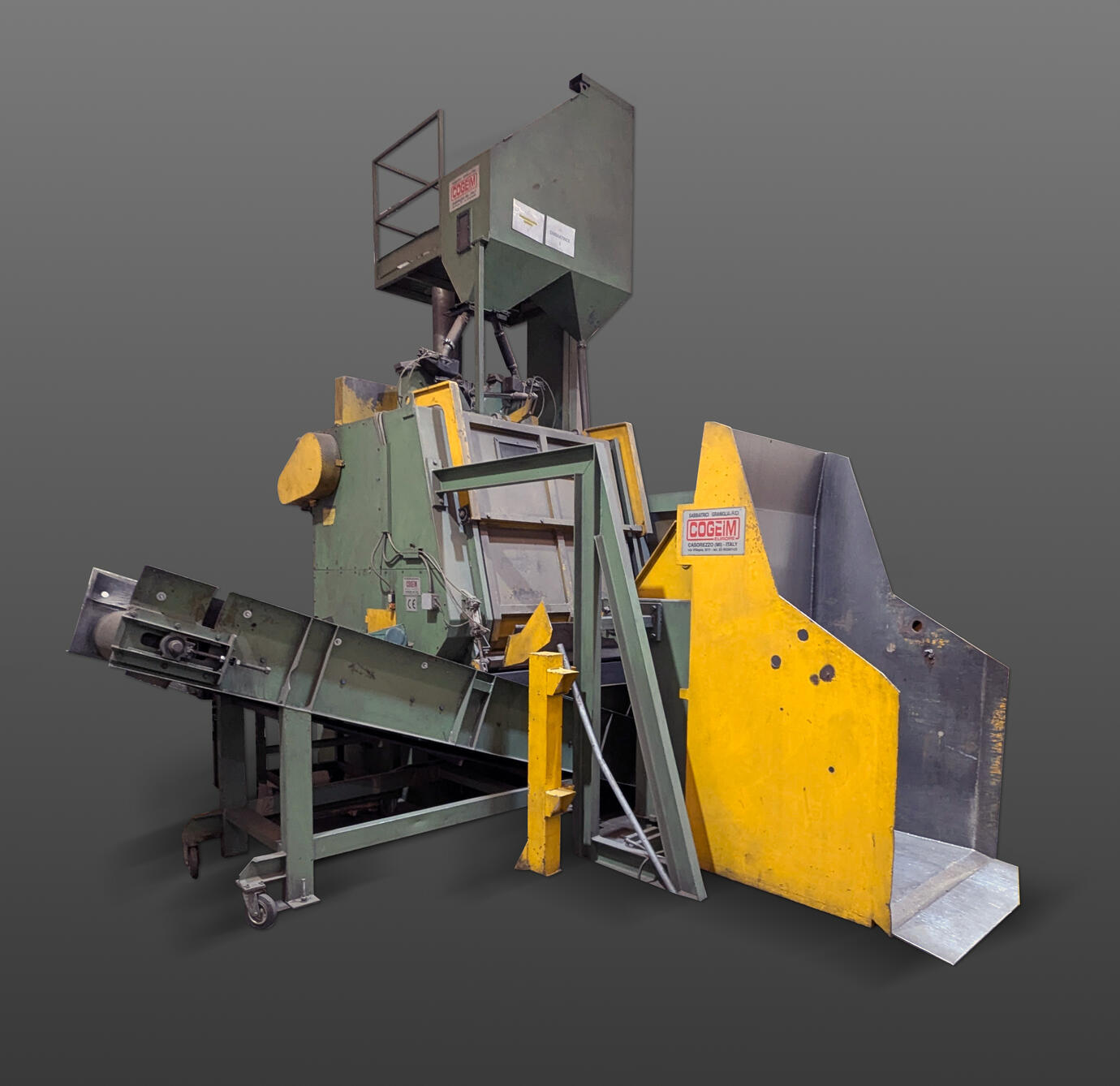
l Rubber Tumble Blast Machine
An automatic batch sandblasting unit that treats metal components via a perforated rubber belt conveyor. It continuously tumbles the parts, exposing every surface to high-velocity abrasive flow (65–110 m/s).
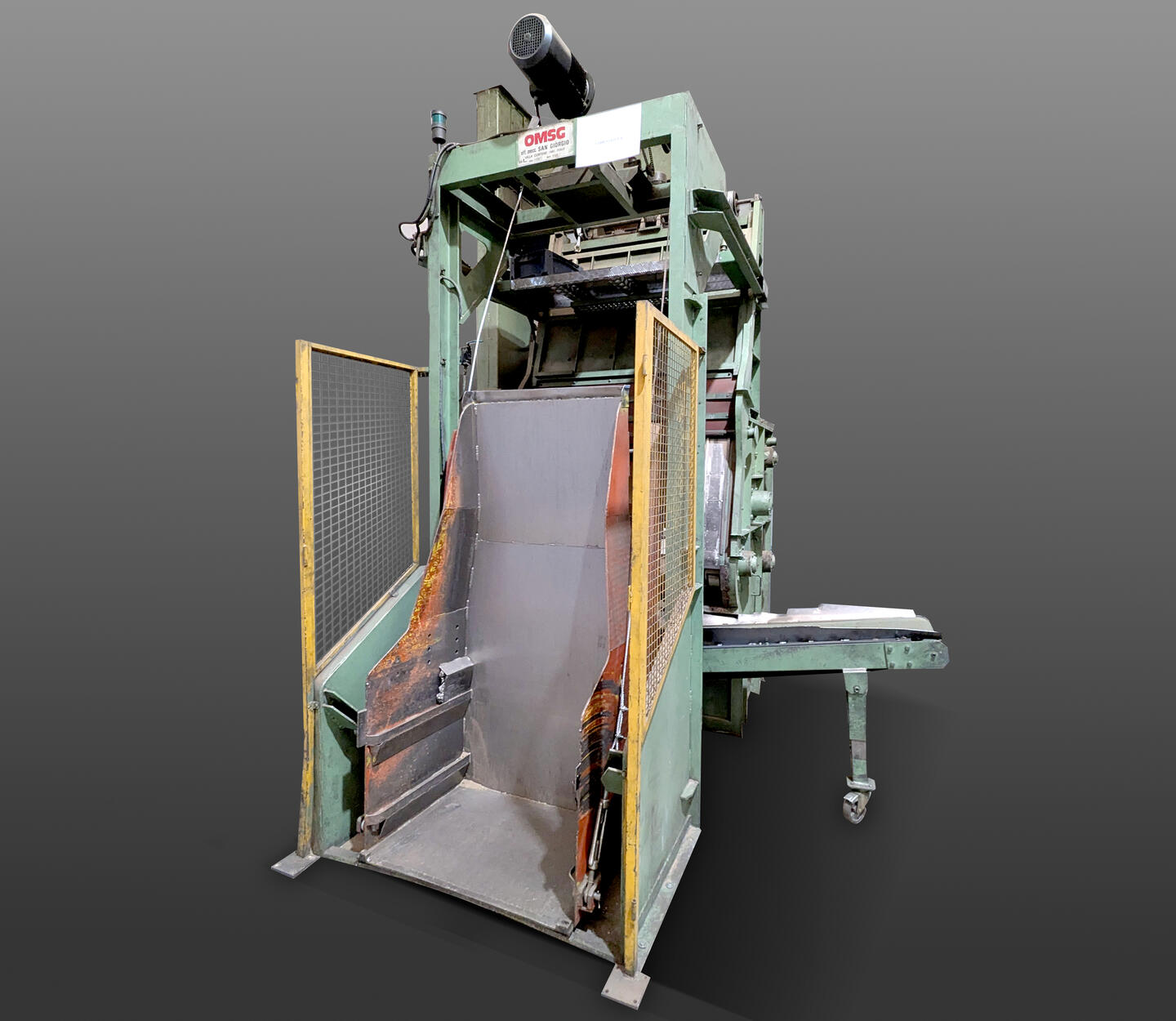
l Steel Tumble Blast Machine
The complete cycle—loading, shot blasting with automatic abrasive recovery via magnetic/cyclonic separator, and automatic unloading through belt reversal—is PLC-controlled. It enables the processing of batches ranging from 200 kg to 3.5 tons/hour, ensuring the removal of burrs, foundry sand, oxides, and scale from iron castings, pressings, and forgings made of cast iron, steel, and aluminum. The tumbling movement provides the advantage of full, omnidirectional coverage of complex geometries, unlike continuous conveyor belts where parts remain static.
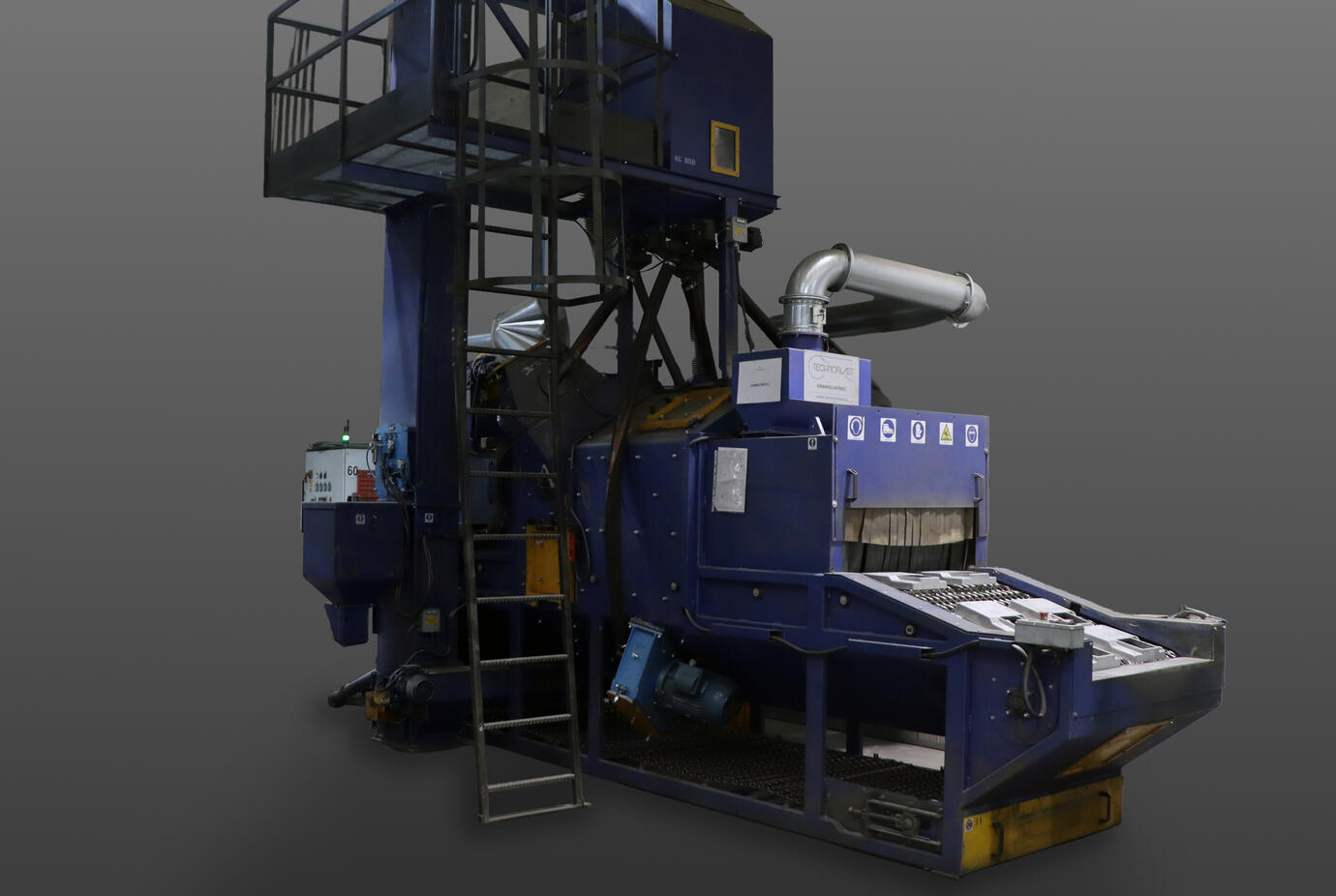
l Wire Mesh Belt Shot Blast Machine
The wire mesh belt shot blast machine is a continuous blasting unit where metal components, transported statically on a high-resistance wire mesh belt (manganese steel 65 HRC), pass through the blast chamber at adjustable speeds (0.5–2 m/min). Centrifugal wheels located both above and below project abrasive through the mesh, blasting both surfaces in a single pass without any collisions between parts. It is ideal for delicate die-castings, thin-walled castings, and flame-cut parts that require absolute stability during treatment.

_ link & download
_ link &
download

Download informative materials and specifications to learn more about our processes, our methodology, and how we guarantee our high quality standards:
Industries Served
Procedures & Quality

_ FAQ _ (Frequently Asked Questions)
_ FAQ (Frequently Asked Questions)


Via Collebeato 22 | 25127 Brescia | ItalyP.Iva C.F. 04150990986 | Rea BS 592530 | Cap. Soc. 20.000 I.V.
